LPHYS'26. Practicalities
This page summarises practical information for participants travelling to Costa Rica for the 34th Annual International Laser Physics Conference (LPHYS'26). It covers everyday matters such as money, mobile internet, electricity, weather, local transport, and emergency contacts.
Information on flights, airport arrival, and transfer to the conference hotel is available on the Travel Information page. Visa, accommodation, and vaccination information are provided on separate pages.
Emergency Contacts
- Emergency Number: 911 (police, ambulance, fire department)
- Nearest Private Hospital: Hospital Metropolitano • Heredia, Sobre la, Cariari C3 Corporate Center del cruce de San Antonio de Belén, Autop. Gral. Cañas, Heredia, 70205
- Nearest Public Hospital: Hospital San Rafael de Alajuela, Radial Francisco J. Orlich, Provincia de Alajuela, Alajuela
- Conference Emergency Contact:
-

Kseniia A. Reidik
, Manager
Astro Science Ltd., Canada
lphys26@lasphys.com
+506 6090 9762 (Costa Rica)
-

Quick Facts
| Country | Costa Rica |
|---|---|
| Conference city / area | San Antonio de Belen / La Ribera de Belen, Heredia Province, Greater San Jose area |
| Main airport | Juan Santamaria International Airport (SJO) |
| Currency | Costa Rican colon (CRC). US dollars are also commonly accepted in many tourist-facing places. |
| Time zone | Central Standard Time (CST), UTC-6. Costa Rica does not use daylight saving time. |
| Electricity | 120 V, 60 Hz; plug types A and B. |
| Language | Spanish. English is commonly understood in hotels and tourist services, but not everywhere. |
| Emergency number | 911 |
Money and Payments
The official currency is the Costa Rican colon (CRC). Prices are often written with the symbol ₡. In many tourist-facing places, prices may also be shown in US dollars.
International credit and debit cards are widely accepted in hotels, restaurants, supermarkets, and larger shops. However, it is advisable to keep a moderate amount of cash in colones for small purchases, tips, short taxi rides, or places where card terminals are temporarily unavailable.
ATMs are available at the airport and in the Greater San Jose area. When withdrawing cash, using ATMs located inside banks, shopping centres, or hotels is generally preferable to using isolated street ATMs.
As a rough everyday reference, a small cash amount such as 5000 CRC (~11 USD / ~9.9 EUR) may be useful for minor local expenses. Please note that exchange rates are approximate and may change.
Internet and Mobile Phones
Free Wi-Fi is available at the conference venue as well as in all hotels recommended on the Accommodation page.
Participants staying in independently arranged accommodation should verify Wi-Fi availability and quality in advance.
Local SIM cards and eSIMs are available from Costa Rican mobile operators and international eSIM providers. If you rely on mobile internet for transport apps, maps, or communication during your stay, we recommend arranging roaming or an eSIM before arrival, or purchasing a local SIM shortly after arrival.
Participants using two-factor authentication for email, banking, or institutional systems should make sure that they can receive authentication codes while abroad.
Electricity
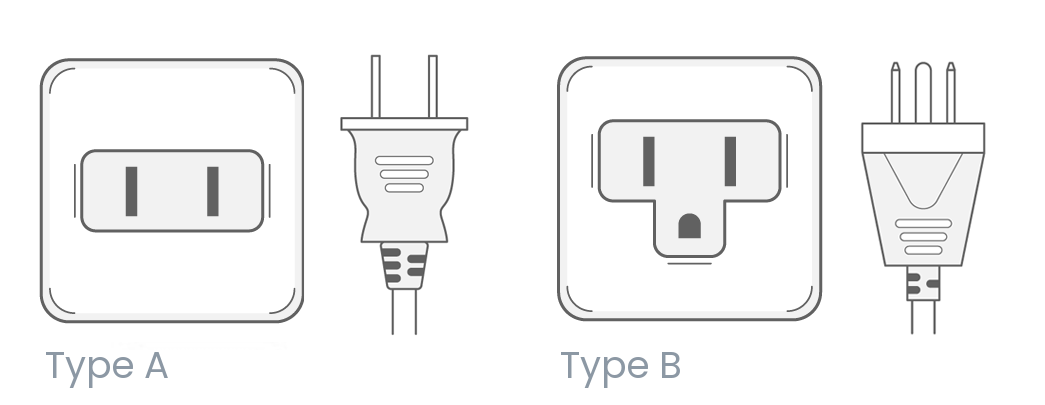
Costa Rica uses 120 V, 60 Hz, with plug types A and B, similar to North American outlets. Participants from Europe, the UK, most of Asia, and many other regions will usually need a plug adapter.
Most laptop and phone chargers support 100-240 V, but please check the label on your charger before travelling. Devices that support only 220-240 V require a voltage converter, not just a plug adapter.
Weather and Clothing
July is part of the rainy season in Costa Rica. In the Central Valley, mornings may be bright and warm, while rain is common later in the day. A compact umbrella or light rain jacket is useful.
Indoor spaces such as hotels, conference rooms, and vehicles may be air-conditioned. We recommend bringing a light sweater or jacket even if the outdoor temperature is warm.
Comfortable shoes are recommended. The conference hotel area is convenient for the event itself, but Costa Rica is not always pedestrian-oriented outside hotel and commercial zones.
Food and Water
Tap water is generally considered safe in most urban and tourist areas of Costa Rica, including the Greater San Jose area. Bottled water is also widely available.
The conference hotel and nearby commercial areas offer restaurant options, but late evening availability may be more limited than in large city centres. Participants with strict dietary requirements are advised to plan ahead and keep suitable snacks with them, especially on arrival day.
Local Transport
Ride-hailing applications and official taxis are the most convenient way to move around the Greater San Jose area. For most conference participants, renting a car is unnecessary unless you plan to travel around Costa Rica before or after the conference.
If you use a taxi, confirm the destination and approximate price before starting the trip, or use an official airport or hotel taxi service. For airport arrival details, please see the Travel Information page.
Safety
Costa Rica is a major tourist destination, but normal travel precautions are still necessary. Do not leave bags, laptops, passports, or phones unattended in public areas, restaurants, taxis, or parked cars.
Use hotel safes when available, carry only what you need for the day, and avoid displaying large amounts of cash. If you need to move around late in the evening, using a taxi or ride-hailing service is preferable to walking in unfamiliar areas.
Please be cautious with unofficial offers of accommodation, transport, or conference-related services. Official conference information is published on the LPHYS website or sent from official conference email addresses.
Language
The official language of Costa Rica is Spanish. English is commonly used in hotels, airport services, and many tourist-facing businesses, but it should not be assumed in all local situations.
It may be useful to keep the conference hotel name and address saved on your phone for taxi drivers and transport services.
Health, Pharmacies, and Insurance
Pharmacies are common in the Greater San Jose area and usually carry standard over-the-counter medicines. Participants who take prescription medication should bring enough for the full trip, together with any relevant prescription documentation.
We strongly recommend having travel medical insurance that covers the full duration of your stay in Costa Rica. General travel health information, vaccination considerations, mosquito-borne illnesses, climate-related advice, and entry-related health requirements are summarised on the Travel Health and Vaccination page.