Plenary Speakers

Quantum Metrology for Open Systems
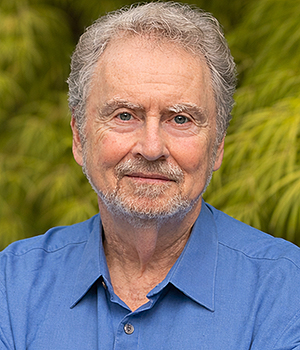
Luiz Davidovich

Luiz Davidovich

Federal University of Rio de Janeiro, Rio de Janeiro, Brazil
Texas A&M University, College Station, TX, USA

Luis Davidovich's research focuses on the dynamics of open quantum systems, combining theoretical and experimental approaches with applications in cavity quantum electrodynamics and quantum metrology. He obtained his PhD from the University of Rochester, and has since concentrated on quantum optics and quantum information. He is currently Emeritus Professor of Physics at the Federal University of Rio de Janeiro.

He was awarded the Grand Cross of the Brazilian National Order of Scientific Merit in 2000 and received Brazil's most prestigious scientific distinction, the Admiral Álvaro Alberto Prize, from the National Research Council (CNPq) in 2010. He was also awarded the Physics Prize of The World Academy of Sciences (TWAS) in 2001 and, more recently, the Willis Lamb Award and the TWAS Apex Award in 2025.

Luis Davidovich is a member of the Brazilian Academy of Sciences, where he served as President from 2016 to 2022, and of TWAS, where he was Secretary-General from 2019 to 2022. He is an international member of the U.S. National Academy of Sciences, the European Academy of Sciences, and the Chinese Academy of Sciences. He is also a Fellow of Optica and of the American Physical Society.

Metasurfaces and Metamaterials for Nonlinear Photonics

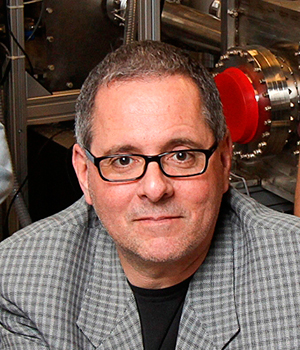
Robert W. Boyd

Robert W. Boyd

University of Rochester, Rochester, NY, USA
University of Ottawa, Ottawa, ON, Canada

Robert W. Boyd is one of the world's leading researchers in optics and photonics. He serves as Canada Excellence Research Chair in Quantum Nonlinear Optics at the University of Ottawa and Professor of Physics at the University of Rochester. His research has advanced our understanding of nonlinear and quantum optical phenomena, including slow and fast light, quantum imaging, and quantum communication. Author of the seminal textbook Nonlinear Optics, Professor Boyd has published more than 550 scientific articles, holds ten patents, and has played a major leadership role in the optics community through service to APS, Optica, Physical Review Letters, and Science. His contributions have had a lasting impact on both fundamental science and photonic technologies.

What Can We Learn from Attosecond Pulses?

Louis F. DiMauro

Louis F. DiMauro

The Ohio State University, Columbus, OH, USA

Louis F. DiMauro is Professor of Physics and Hagenlocker Chair at The Ohio State University. He received his BA (1975) from Hunter College, CUNY, and his PhD from the University of Connecticut in 1980. He was a postdoctoral fellow at Stony Brook University before arriving at AT&T Bell Laboratories in 1981. He joined the staff at Brookhaven National Laboratory in 1988, rising to the rank of Senior Scientist. In 2004, he joined the faculty at The Ohio State University along with his colleague Pierre Agostini (2023 Nobel Prize in Physics). He was awarded the 2004 BNL/BSA Science & Technology Prize, the 2012 OSU Distinguished Scholar Award, the 2013 OSA Meggers Prize, and the 2017 APS Schawlow Prize in Laser Science. He is a Fellow of the American Physical Society, Optica, and the American Association for the Advancement of Science. He is currently the Director of the Institute for Optical Science and Co-Director of the NSF NeXUS facility and the OSU Chemical Physics graduate programme. He has served on numerous national and international committees and government panels, served as the 2010 APS DAMOP Chair, as Vice-Chair of the NAS CAMOS Committee, and on the NAS Board of Physics and Astronomy. His research interests are in experimental ultrafast and strong-field physics. In 1993, he and his collaborators introduced the widely accepted semiclassical model in strong-field physics. His current work is focused on the generation, measurement, and application of attosecond X-ray pulses, the study of fundamental scaling of strong field physics, and applications of X-ray free-electron lasers.

Complex Bands and Topology with Coupled Lasers

Nir Davidson

Nir Davidson

Weizmann Institute, Rehovot, Israel

Prof. Nir Davidson joined the Weizmann Institute's Department of Physics of Complex Systems in 1994. He served as Head of the Department of Complex Systems (2010–2015) and as Dean of the Faculty of Physics, as well as Director of the André Deloro Institute for Space and Optics Research and the Center for Experimental Physics (2015–2021). He is the Head of the Crown Photonics Center and AMOS Domain, and the incumbent of the Peter and Carola Kleeman Professorial Chair of Optical Sciences. He was elected Vice-Chair of the Scientific Council in 2022 and Chair of the Scientific Council in 2024.

Prof. Davidson conducts research on laser physics and ultra-cold atomic physics. The behaviour of matter at less than a millionth of a degree above absolute zero is governed by the principles of quantum mechanics. At such temperatures, particles may combine into a new state of matter known as a Bose–Einstein condensate (BEC), in which quantum behaviour can be observed on a macroscopic scale. His work focuses on manipulating atomic motion using lasers and applying this control to atomic traps that induce the BEC state, as well as on the use of such techniques for precision measurements of quantum phenomena. His long-term aim is to establish ultra-cold atoms as a tool for studying the transition from classical, Newtonian physics to quantum, nonlinear dynamics.

Born in Ashkelon, Israel, in 1962, Prof. Davidson received a BSc from the Hebrew University of Jerusalem in 1982, an MSc from the Technion – Israel Institute of Technology in 1988, and a PhD from the Weizmann Institute of Science in 1993. This was followed by two years as a research fellow at Stanford University.

He is the recipient of the F.W. Bessel Award from the Alexander von Humboldt Foundation (2002), the Yosefa and Leonid Alshwang Prize for Physics from the Israel Academy of Sciences and Humanities (1998), the Morris L. Levinson Prize in Physics, and the Rosa and Emilio Segrè Research Award, both awarded by the Weizmann Institute's Scientific Council (2001). He was elected a Fellow of the Optical Society of America (2011) and a Fellow of the American Physical Society (2022). From 2007 to 2011, he served as President of the Israeli Laser and Electro-Optics Society.

Spin-Selective Coherent Light Scattering from Ion Crystals and Towards Scalable Quantum Computing

Generation of Terahertz Pulses by Laser-Plasma Interactions: From Microjoule to Joule-Class Energy

Luc Bergé

Luc Bergé

University of Bordeaux, Talence, France

Luc Bergé graduated in mathematics and physics from the Universities of Toulouse and Paris-Sud, Orsay, France. In 1990, he was employed as a research scientist, then head of laboratory at CEA (French Commission for Atomic Energy and Alternative Energies). Since 2023, he has been working as a research director at CELIA, Bordeaux University. He mostly dedicated his research to the filamentation of ultrashort laser pulses in transparent media and related properties such as pulse self-compression, which he pioneered in the early 2000s. Nowadays, he focuses his activities on terahertz pulse generation by femtosecond pulses ionizing gases and solids.

Luc Bergé is a Fellow of Optica, EPS, EOS, and APS. He received the 2018 Gentner–Kastler Prize, jointly attributed by the German and French Physical Societies, and the 2025 Humboldt Research Award. Between 2021 and 2024, he was President of the European Physical Society.

Optical Computing: Principles, Examples, and Prospects

Peter McMahon

Peter McMahon

Cornell University, Ithaca, NY, USA

Peter McMahon is an Associate Professor of Applied & Engineering Physics at Cornell University. He received his Ph.D. in Electrical Engineering from Stanford University in 2014, where he also performed his postdoctoral training in Applied Physics until starting as a faculty member at Cornell in 2019. He has received Packard and Sloan Fellowships and is the recipient of the Lomb Medal from Optica.

Laser Spectroscopy of a Nucleus - 229mTh Nuclear Clock Transition

Where Does Quantum Optics Go Next?

Ido Kaminer

Ido Kaminer

Technion – Israel Institute of Technology, Haifa, Israel

Prof. Kaminer is the Pollak Chair Professor at the Technion. During his PhD, he discovered new classes of accelerating optical beams, for which he received the 2014 American Physical Society (APS) Award for Outstanding Doctoral Dissertation in Laser Science. Prof. Kaminer was the first Israeli to win an APS award for his PhD thesis.

As a postdoc at MIT, he established the foundations of macroscopic quantum electrodynamics (MQED) for photonic quasiparticles and used it to enable forbidden electronic transitions in atoms. As a faculty member, Prof. Kaminer created a paradigm shift in the understanding of free-electron radiation, connecting it to the field of quantum optics and establishing the area now known as free-electron quantum optics. He performed the first experiment on electron microscopy with non-classical light, demonstrating that the quantum statistics of photons can be imprinted on the electron.

For his achievements as a faculty member, Prof. Kaminer was elected to the Israeli Young Academy, which includes 30 young Israeli faculty members below the age of 45. He has won multiple awards and grants, including ERC Starter and Consolidator Grants, the Moore Foundation grant, and the 2022 Schmidt Science Polymath Award. Prof. Kaminer is the laureate of the 2021 Krill Prize, the 2021 Blavatnik Award in Physical Sciences & Engineering in Israel, and the 2022 Adolph Lomb Medal, the top international award for a young scientist (age 35 or younger) in the field of optics. He was selected for the 2023 Lem European Research Prize, the 2024 ACS Photonics Young Investigator Award, and the 2026 Stanford Science Visiting Professorship.

Quantum Simulation and Sensing with Photon-Mediated Interactions

James K. Thompson

James K. Thompson

University of Colorado, Boulder, CO, USA

Prof. James K. Thompson is a Professor in the Department of Physics at the University of Colorado, a Fellow of JILA, and a Fellow of the American Physical Society. Before moving to JILA in 2006, Prof. Thompson completed his undergraduate work at Florida State University on accelerator-based laser spectroscopy of highly charged ions for testing QED. He then completed his PhD at MIT with David Pritchard on single-ion mass measurements and the most precise direct test of E = mc2, for which he was recognised with the APS DAMOP Thesis Prize. He subsequently carried out postdoctoral research with Vladan Vuletić at MIT on quantum memories and photon-pair generation using laser-cooled atoms. At JILA, Prof. Thompson's research focuses on cavity QED using rubidium and strontium atoms, with topics including the generation of highly entangled states, superradiant lasers, quantum simulation, nonclassical light generation, matter-wave interferometry, and optical clocks.
High-power Single-Frequency Multimode Fiber Laser Amplifiers

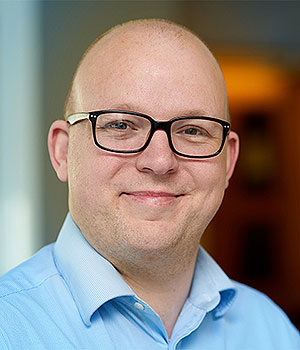
Hui Cao

Hui Cao

Yale University, New Haven, CT, USA

Hui Cao is the John C. Malone Professor of Applied Physics, a Professor of Physics, and a Professor of Electrical Engineering at Yale University. She received her Ph.D. degree in Applied Physics from Stanford University in 1997. Prior to joining the Yale faculty in 2008, she was on the faculty of Northwestern University for ten years.

Her technical interests and activities are in the areas of mesoscopic physics, complex photonic materials and devices, nanophotonics, and biophotonics. Cao is a Fellow of IEEE, AAAS, APS, and OSA, and an elected member of the National Academy of Sciences and the American Academy of Arts and Sciences.

Quantum Engineering of Strong Field Physics

Thomas Brabec

Thomas Brabec

University of Ottawa, Ottawa, ON, Canada

Thomas Brabec received his PhD in 1992 and his Habilitation in 1997 from the Vienna University of Technology. Since 2002, he has been a Professor in the Department of Physics at the University of Ottawa and a Canada Research Chair in Ultrafast Photonics.

His research expertise lies in ultrafast science, nonlinear optics, quantum and classical dynamics, and strong-field dynamics in gases and solids. He has authored more than 200 peer-reviewed publications in these areas, which have received broad international recognition.

Positron Acceleration with Transition Radiation Driven by Ultra Intense Laser at SULF and SEL

Baifei Shen

Baifei Shen

ShanghaiTech University, Shanghai, China
Shanghai Normal University, Shanghai, China

Quantum Simulation of the Unknown: Observation of Pseudogap Physics and Stripes in the Fermi–Hubbard Model

Markus Greiner

Markus Greiner

Harvard University, Cambridge, MA, USA