

Extreme Timescale (Attosecond) and Extreme Photon Energy (Gamma Rays)
R Kienberger1
1 Physik Department, Technische Universität München, München, Germany
Seminar: S9 — Extreme Light Technologies, Science, and Applications
Wednesday, 8 July 2026 · 16:30 – 17:00
Abstract
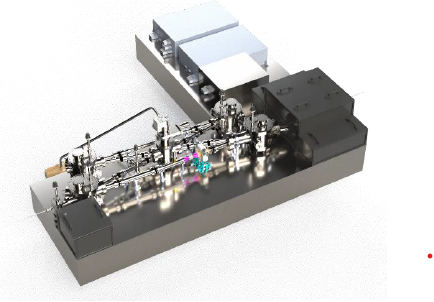
Fig. 1. Rendering of the optical cavity’s CAD model
In this talk, two different projects at the forefront of laser science will be presented:
The generation and measurement of single isolated attosecond pulses in the extreme ultraviolet (XUV) at the beginning of this century has recently been awarded with the Nobel Prize in Physics [1,2]. A pump/probe technique, ''attosecond streaking'' [3], was used to investigate electron dynamics on surfaces and layered systems with unprecedented resolution. Photoelectrons generated by laser based attosecond extreme ultraviolet pulses (XUV), are exposed to a dressing electric field from well synchronized few-cycle infrared (IR) laser pulses. The energy shift experienced by the photoelectrons by the dressing field is dependent on the delay between the XUV pulse and the dressing field and makes it possible to measure the respective delay in photoemission between electrons of different type (core electrons vs conduction band electrons). The information gained in such experiments on tungsten [4] triggered many theoretical activities leading to different explanations on the physical reason of the delay. Attosecond streaking experiments have been performed on different solids [5,6], layered structures and liquids, resulting in different delays -– also depending on the excitation photon energy. These measurements lead to a stepwise increase of the understanding of different physical effects contributing to the timing of photoemission. In this presentation, an overview on the different physical contributions to attosecond time delays in photoemission will be given. The ''absolute'' time delay, i.e. the delay between the instant of ionization and the emission of a photoelectron will be discussed and latest measurements on oriented molecules on surfaces and isosteric molecules in the gas-phase will be presented.
The Gamma Beam System (ELI-GBS) is currently under construction at the Extreme Light Infrastructure -– Nuclear Physics (ELI-NP) in Romania. It shall provide gamma-rays in the range of 1 to 19.5 MeV. The ELI-GBS system is based on the principle of inverse Compton scattering involving a linear electron accelerator and a high intensity laser beam. Here, high energy electrons in the range between 234 and 742 MeV will interact with 515 nm photons resulting in X-ray energies of up to 19.5 MeV [6].
An upgrade of this system with a bunch-train linac and a high-finesse optical enhancement cavity (OC) is planned to increase the source’s brilliance and repetition rate into the multi MHz range. We present the mechanical design of this OC inspired by the OC at the Munich Compact Light Source (MuCLS) [7] at the Technical University of Munich (TUM). It is based on a four-mirror bow-tie geometry, comprising four curved high reflectivity mirrors and will provide an enhancement factor of >900 in the first stage of operation.
References
- M Hentschel, R Kienberger, Ch Spielmann, et al., Nature 414, 509 (2001)
- R Kienberger, E Goulielmakis, M Uiberacker, et al., Nature 427, 817 (2004)
- A L Cavalieri, N Müller, Th Uphues, et al., Nature 449, 1029 (2009)
- S Neppl, R Ernstorfer, A L Cavalieri, et al., Nature 517, 342 (2015)
- M Ossiander, J Riemensberger, S Neppl, et al., Nature 561, 374 (2018)
- official ELI website
- B Günther, R Gradl, C Jud, et al., J. Synchrotron Radiat. 27, 1395 (2020)